

There is a fine line between coincidence and fate . . .
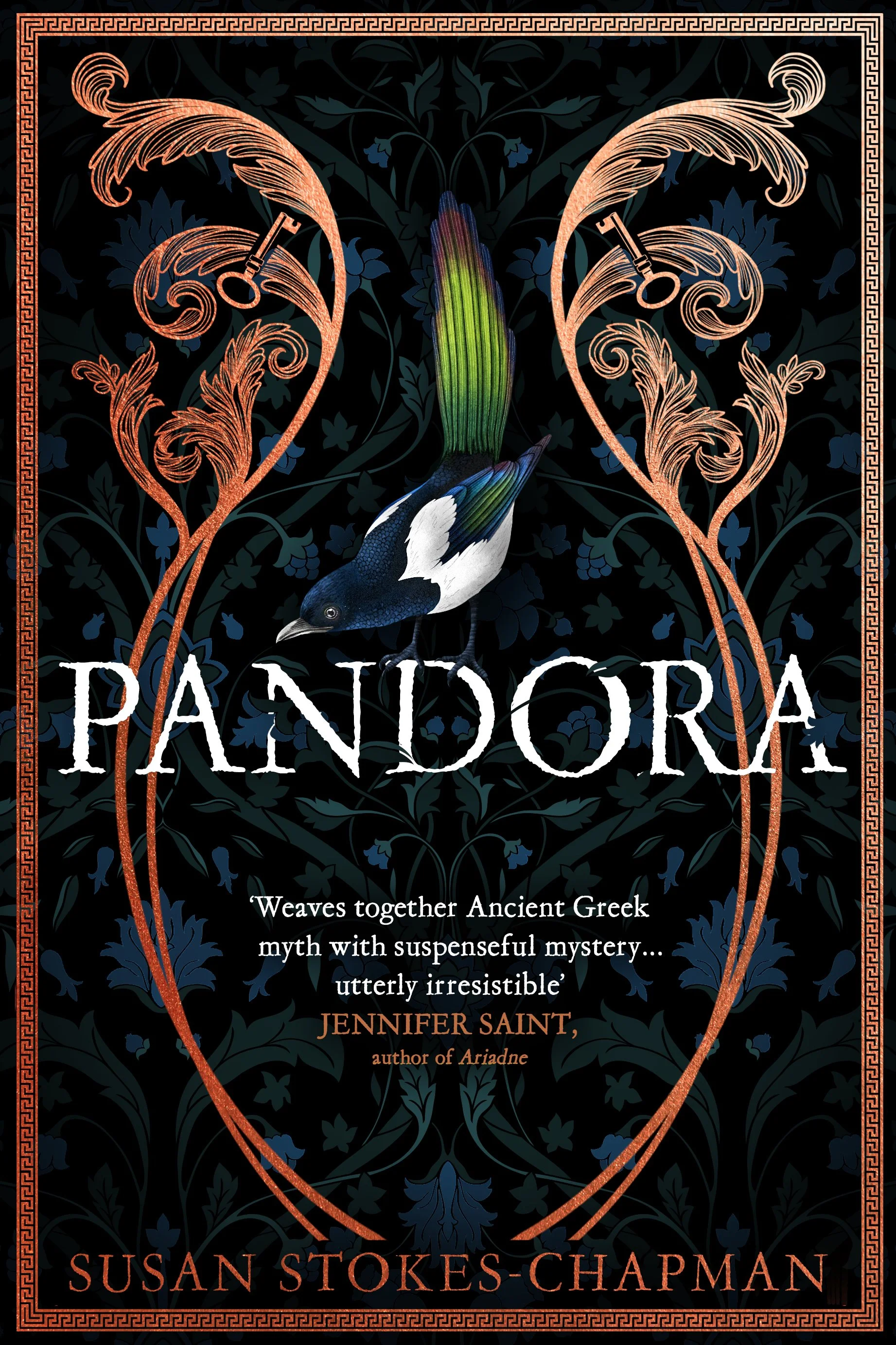
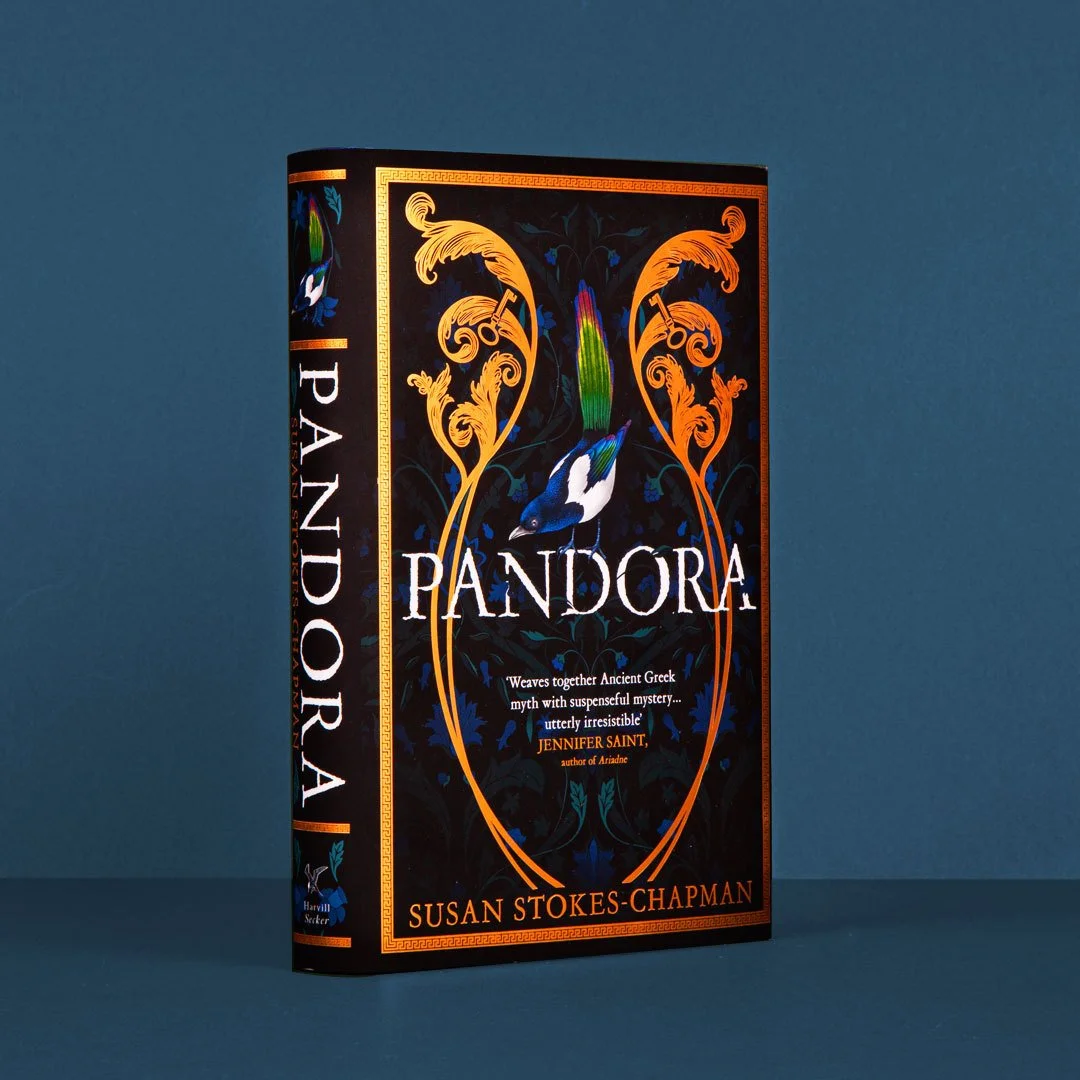
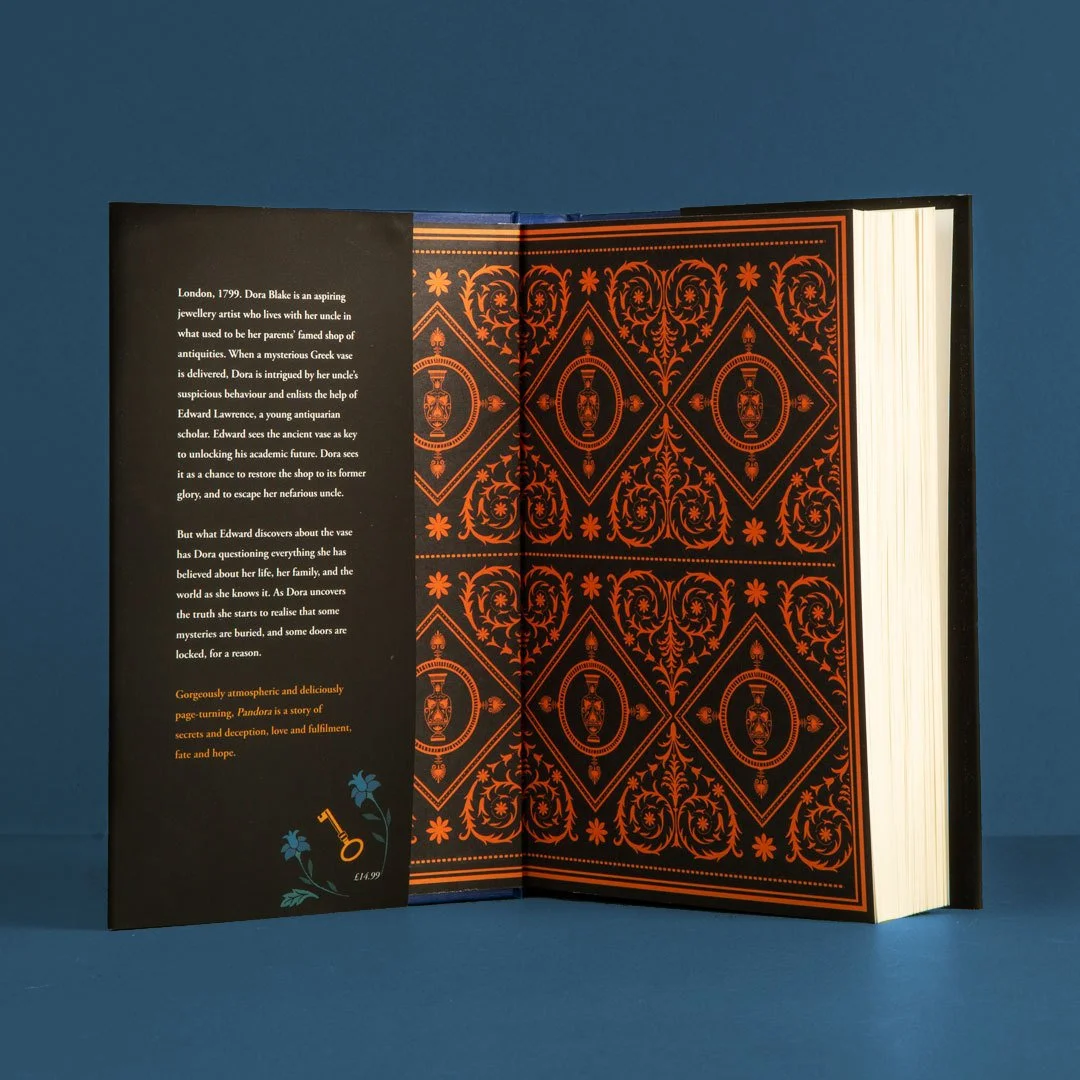
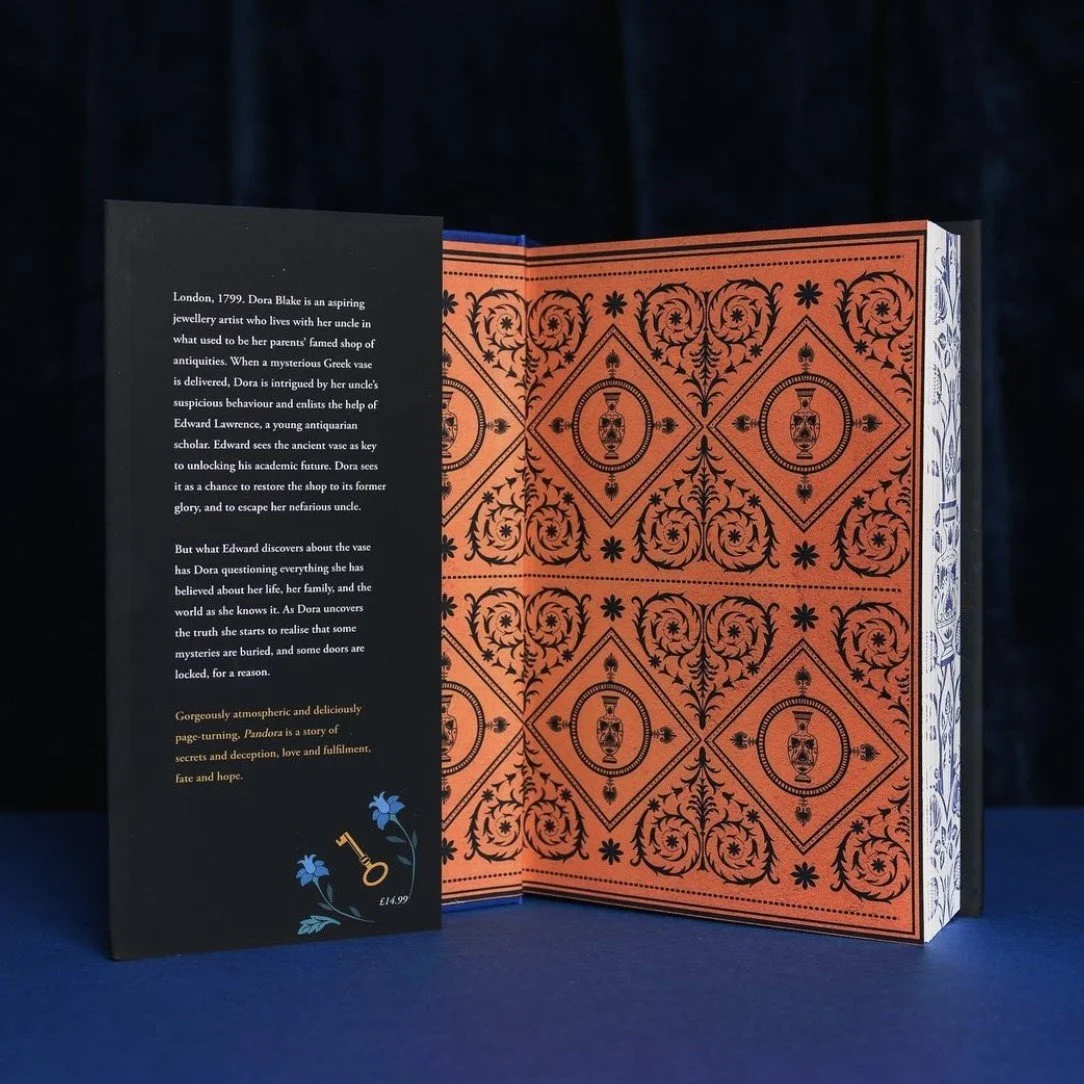
London, 1799. Dora Blake is an aspiring jewellery artist who lives with her uncle in what used to be her parents' famed shop of antiquities. When a mysterious Greek vase is delivered, Dora is intrigued by her uncle's suspicious behaviour and enlists the help of Edward Lawrence, a young antiquarian scholar. Edward sees the ancient vase as key to unlocking his academic future. Dora sees it as a chance to restore the shop to its former glory, and to escape her nefarious uncle.
But what Edward discovers about the vase has Dora questioning everything she has believed about her life, her family, and the world as she knows it. As Dora uncovers the truth she starts to realise that some mysteries are buried, and some doors are locked, for a reason.
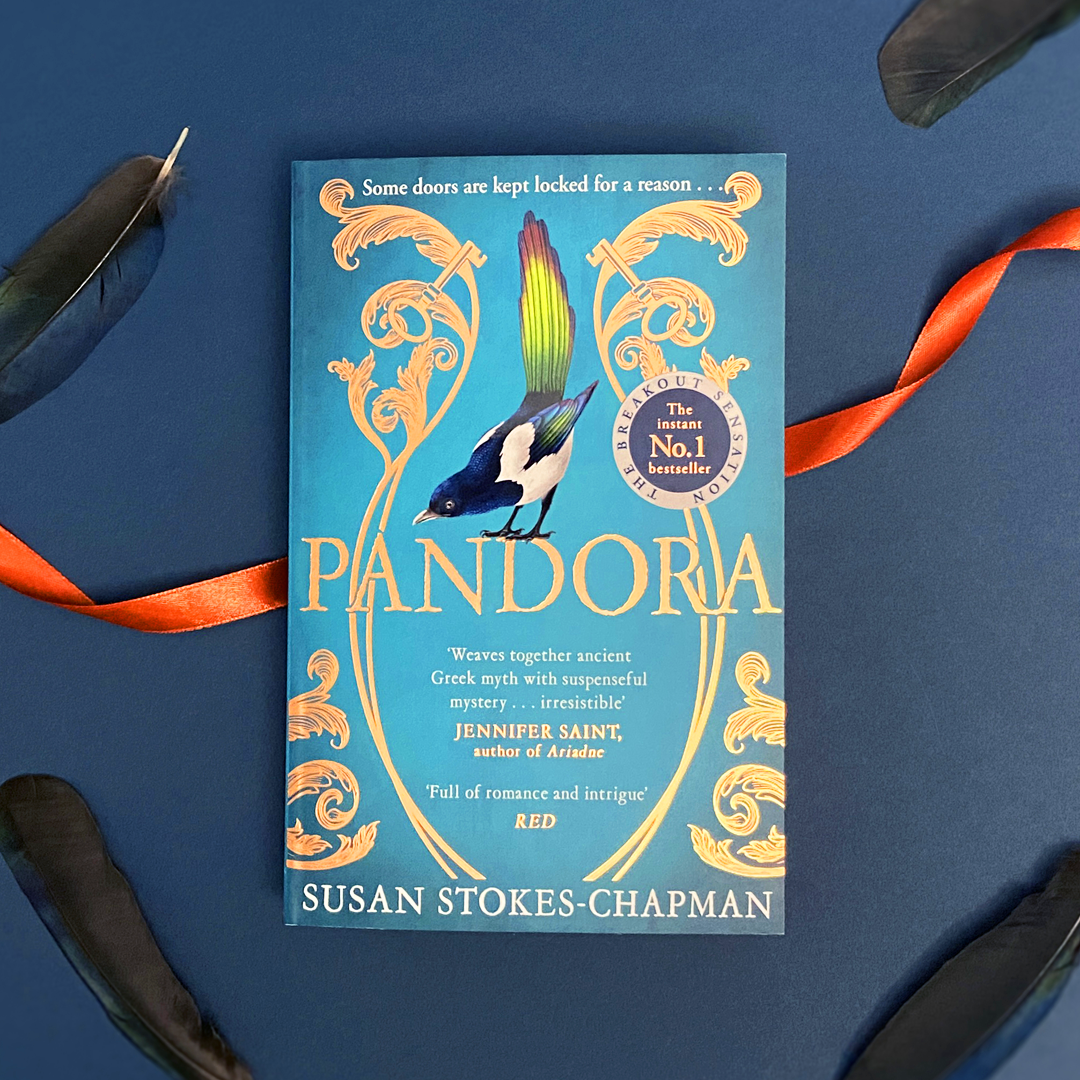
Pandora debuted as a #1 Sunday Times Bestseller, was shortlisted for the Goldsboro Books Glass Bell Award 2023, and previous to publication was shortlisted for the Lucy Cavendish Fiction Prize 2020 as well as longlisted for the Bath Novel Award 2020. The novel was a Sunday Times Historical Book of the Month, a Waterstones Best Historical Fiction Novel, and a USA Indie Next Pick.
The Inspiration
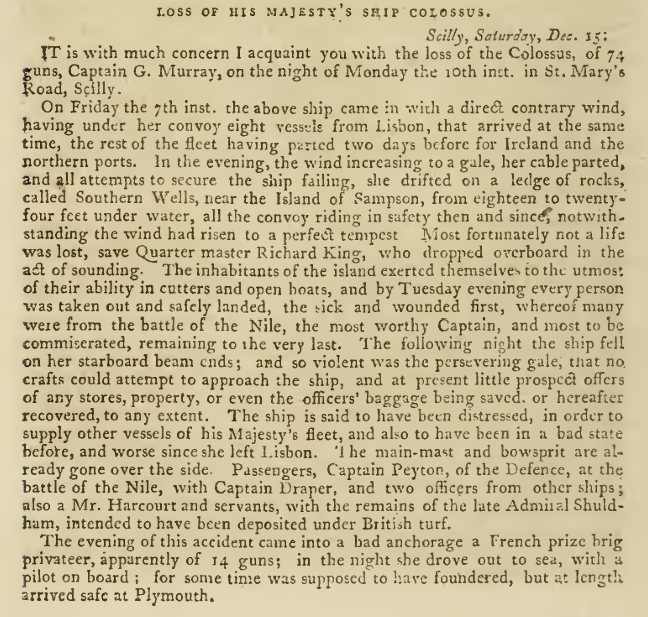
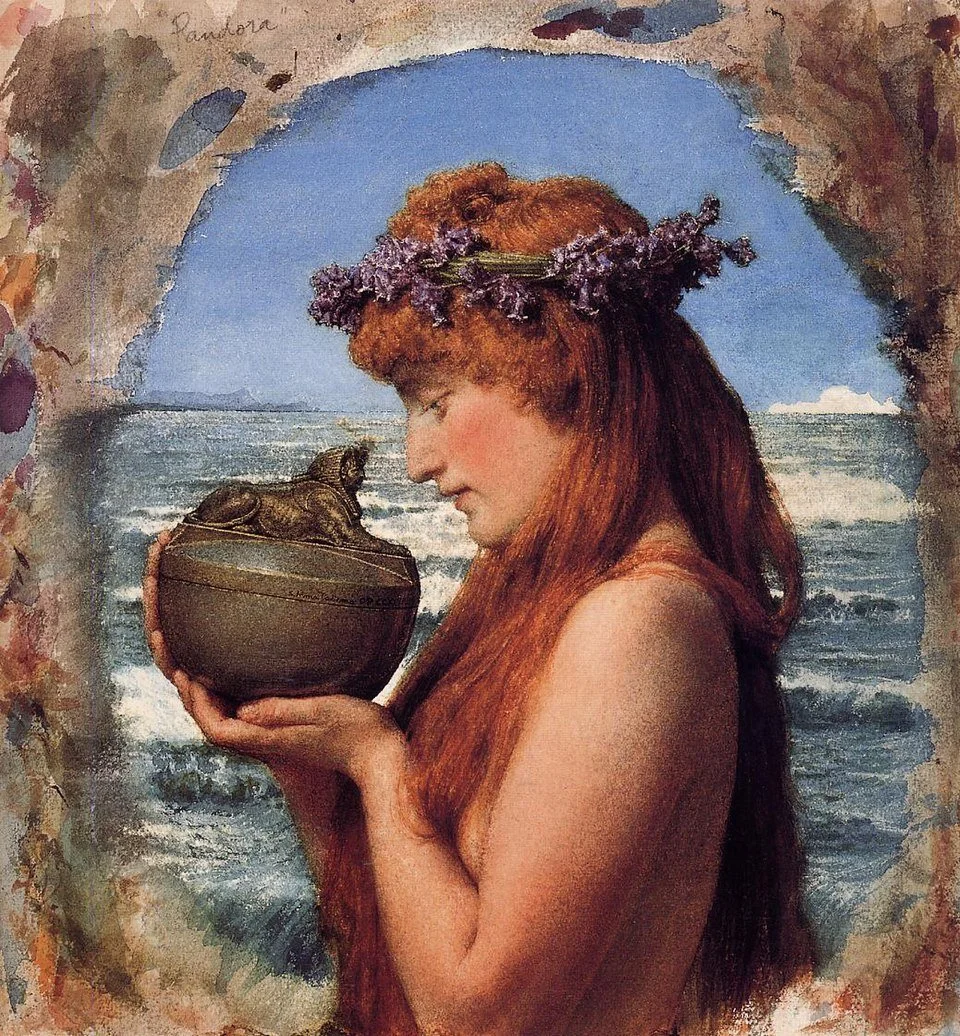
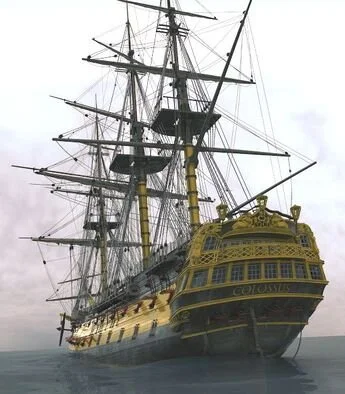
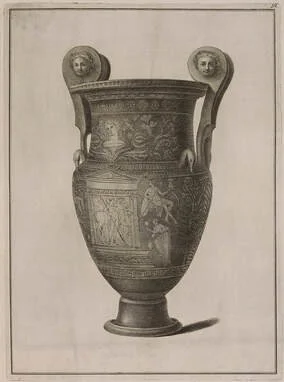
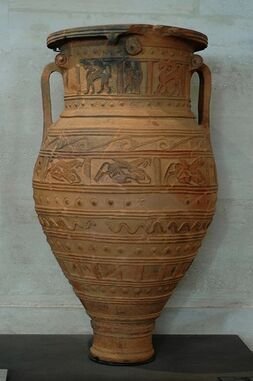
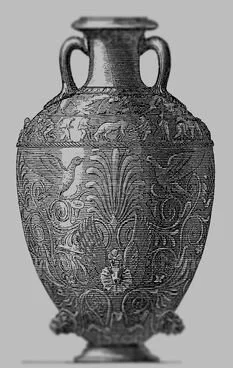
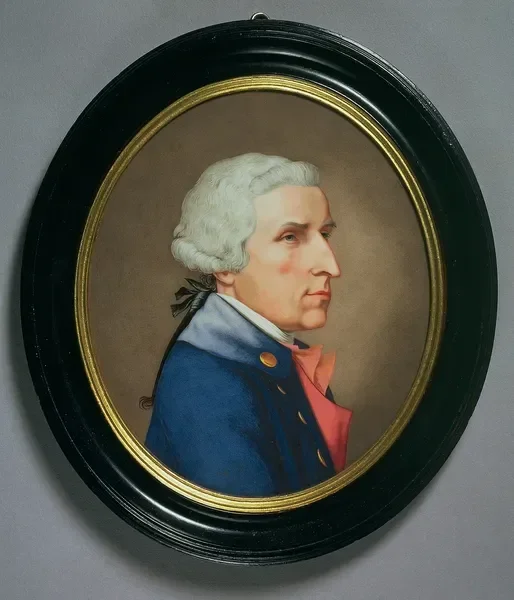
Pandora began as a sudden ‘light-bulb’ moment during a car journey, when Dora and Hermes appeared in my mind fully formed. Almost immediately, the myth of Pandora’s Box followed close behind. What came next was a descent into a frenzied Google rabbit hole, as I tried to figure out how to bring Greek mythology into the setting of Georgian London. In the end, the solution revealed itself with surprising simplicity. The Georgians, after all, were deeply enamoured with the classical world; Greek and Roman art and artefacts were not distant relics, but prized objects of fascination, making their way into collections and institutions such as the British Museum. One notable contributor to the museum was the diplomat and avid collector Sir William Hamilton who, in a twist of serendipity, is said to have lost an entire collection of Greek pottery in a tragic shipwreck off the English coast.
Opposite is a letter written by an unnamed eye-witness, featured in Volume 1 of the British periodical Naval News in December 1798. It details the sinking of the HMS Colossus, which had carried a large part of Hamilton’s treasured collection of Greek pottery onboard. While this letter does not explicitly state that his collection went down with the ship, another letter written by Hamilton himself a year after the event confirms this fact:
Whilst the French remain’d at Naples a commissary was lodged in my house, and made use of my furniture, coaches, & horses, saying he wou’d carry nothing away, but at last he went off with three of my carriages. The pictures I had taken care of, or they wou’d have gone instead of being in good cases. As to my vases that is a sore point, they had better be in Paris than at the bottom of the sea; have you no good news of them? they were excellently packed up, & the cases will not easily go to pieces, & the sea water will not hurt the vases. All the cream of my collection were in those eight cases on board the Colossus, & I can’t bear to look at some remaining cases here in which I know there are only black vases without figures.
The Research
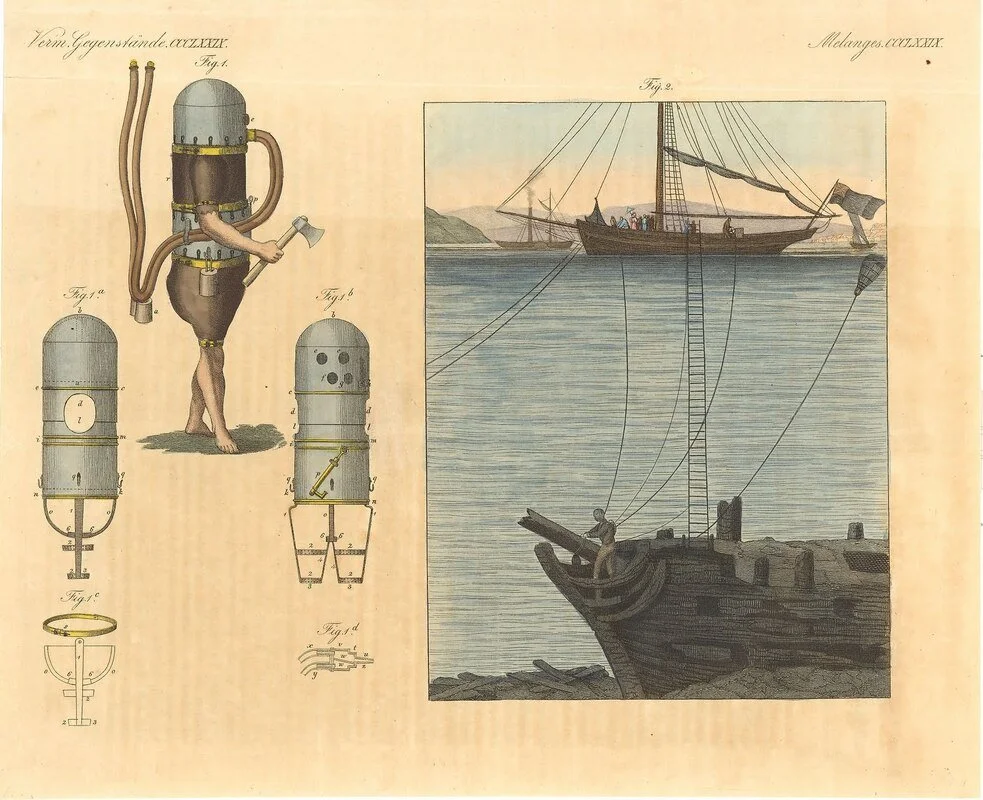
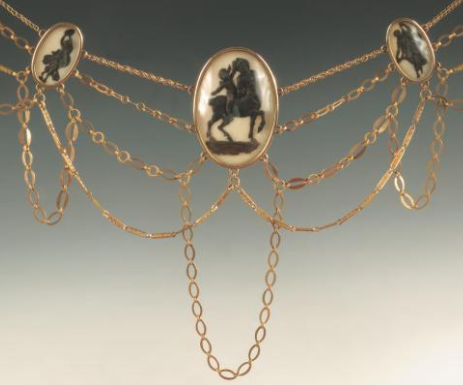
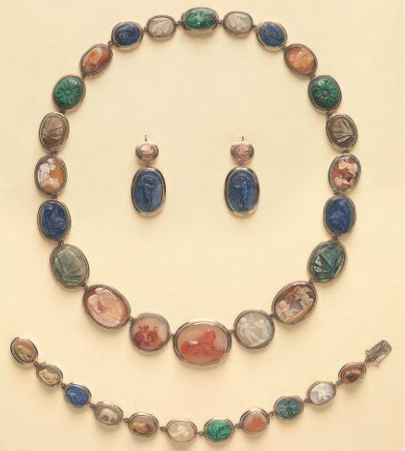
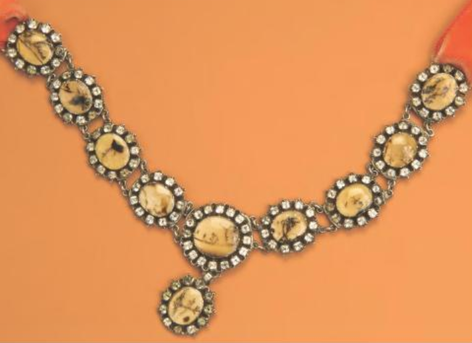
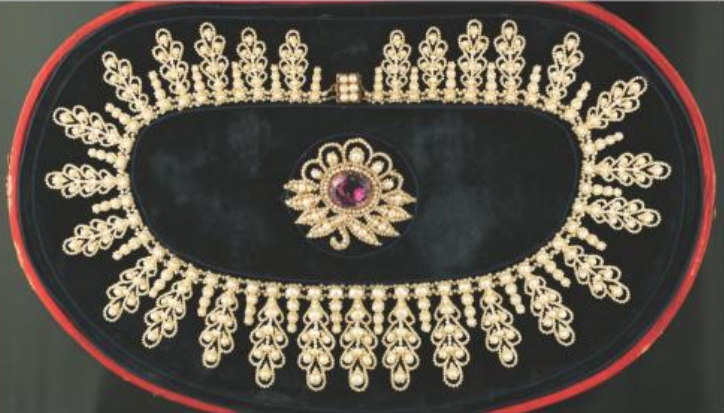
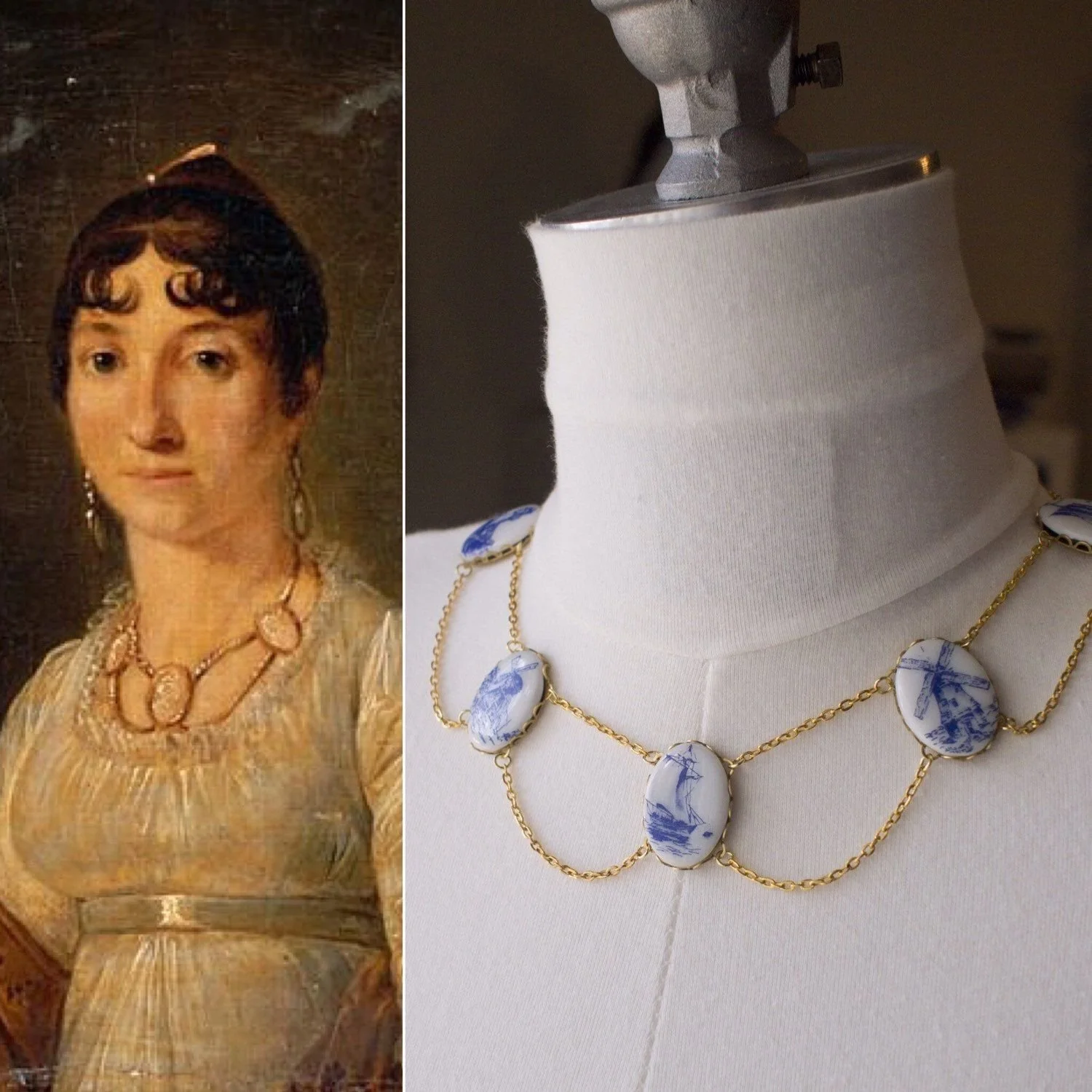
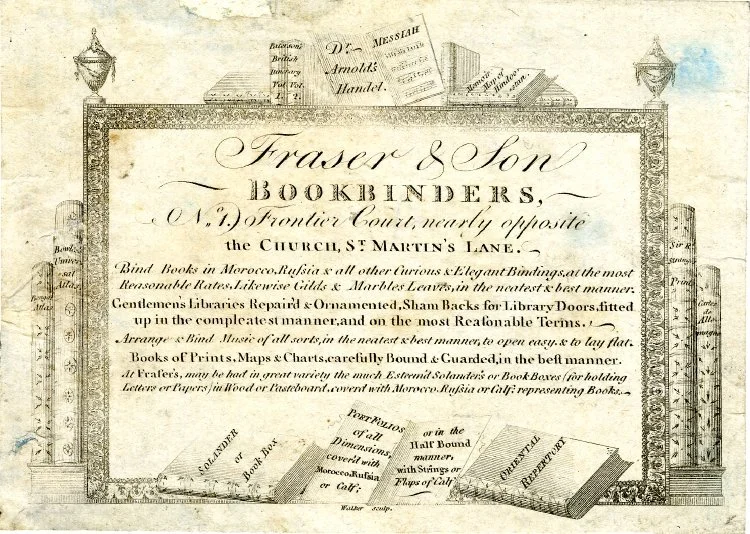
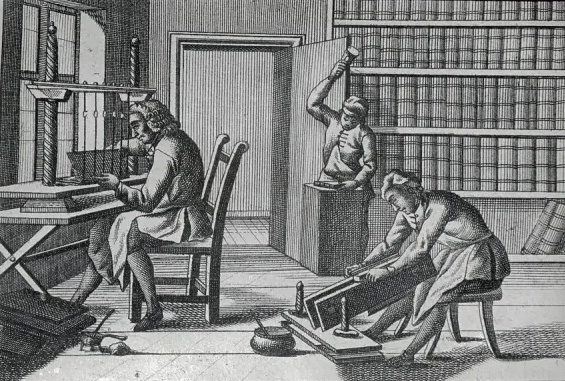
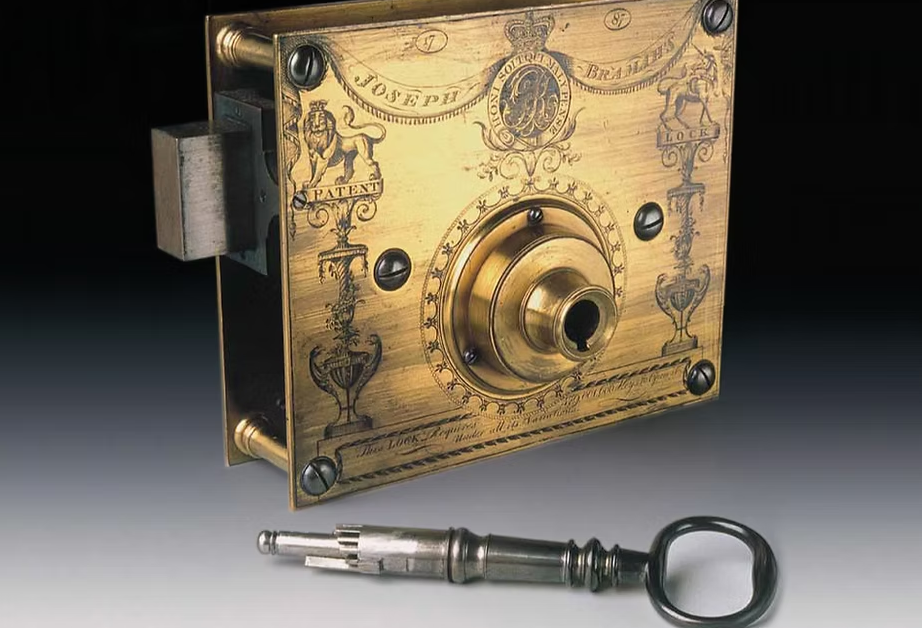
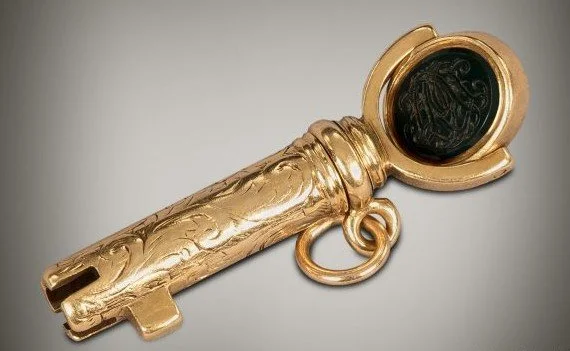
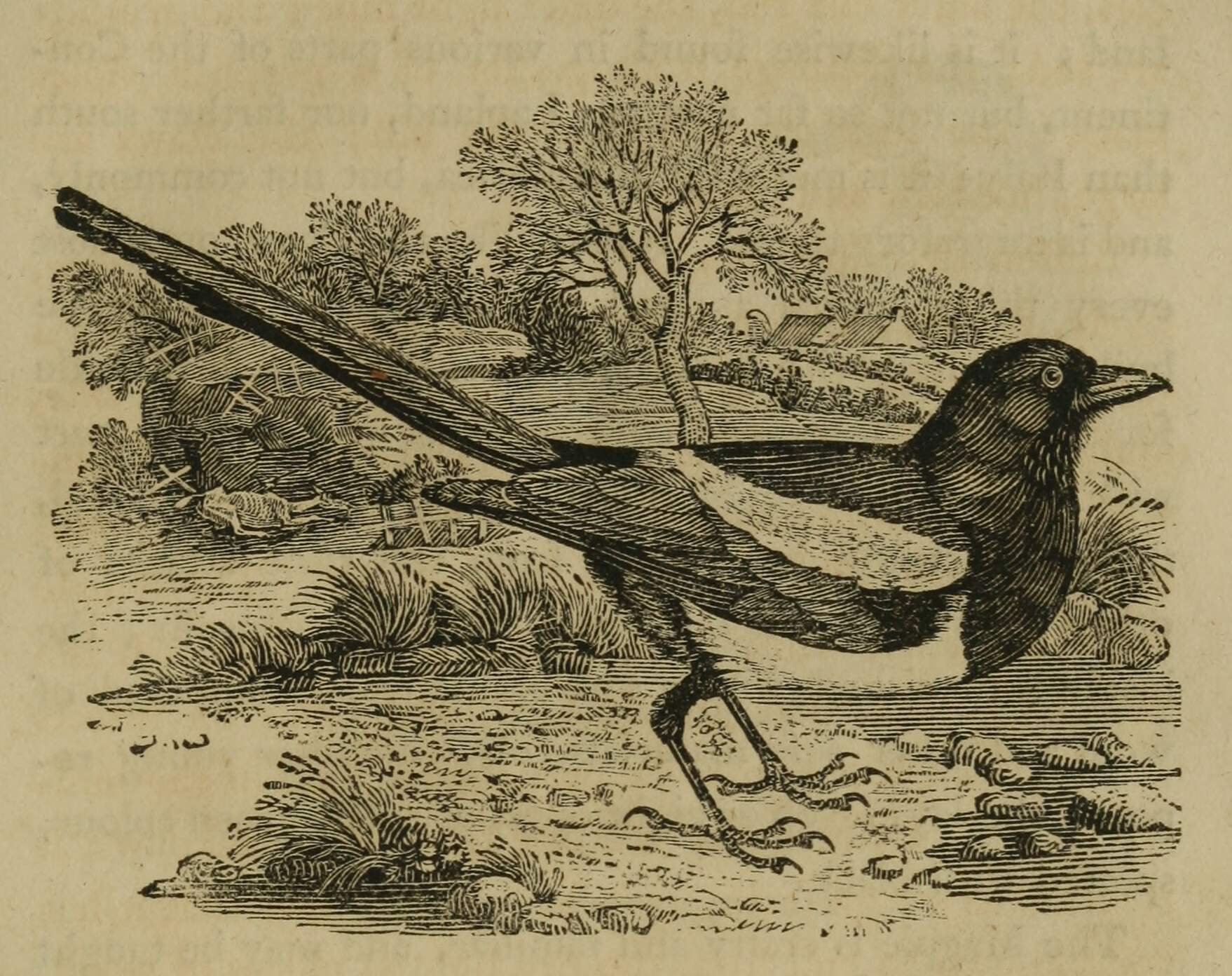
The above documents became the starting point for a wide-ranging body of research, from deep-sea diving and the antiquarian black market to Georgian jewellery-making, the art of bookbinding, the curious personalities of magpies, and the design of eighteenth-century safes! Below is a small glimpse into that world: