
After the publishing deal - what to expect
There are lots of posts out there about submitting to agents, and how debut novelists achieved that longed-for publishing deal (shocker, my last two blogs were exactly about this). However, I've not seen many posts about what happens after the publishing deal but before publication. So, this is my attempt at demystifying that grey area and help you prepare for what is to come ...
Caveat: other publishing houses might have a different process, or someone signing with the same publishing house but with a different editor might experience something else, or perhaps the process might change per book ... I can't speak for those instances, only what I experienced with Pandora (if it changes for my next one, I might revisit this subject).
The Structural Edit
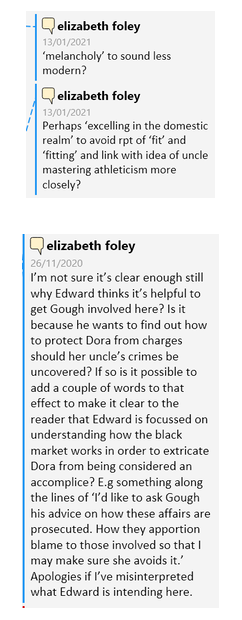
Structural edits are when your editor goes through the novel multiple times via the comment and track changes system (we had four rounds, some very bitty to begin with) to make sure the story flowed, everything made sense at each plot juncture, etc. Aside from general proofreading elements where it might be advised a different word is used, a few repetitious lines removed, and so on and so forth, this stage is when the face of the story might change substantially, and requires a stiff spine and a lot of energy to a) take the feedback on the chin and b) implement the suggested changes. Working with an editor, however, is a two-way street - you are perfectly in your right to say no to suggestions if you absolutely feel wedded to an idea. But if you have the right editor - an editor with a sympathetic ear and an artistic eye (and Liz 100% does, I've been very lucky) - you will both between you make the novel the best version it can possibly be. The images here show a few comments Liz made for mine. At every stage of these edits Liz's comments were always so insightful and made me consider things I never had before - for instance, a very obvious change which never even occurred to me despite Dora's heritage, was to use the Greek language in her speech. Without Liz's expertise or the contributions of Mikaela Pedlow, Liz's excellent editorial assistant, Pandora wouldn't be the novel it is today.
The Copy Edits
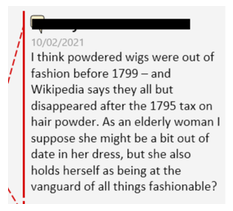
The copy edit element is very similar to the structural edit inasmuch that the comment and track changes functions are still used. In this instance, though, the MS has been sent to an external editor who checks for everything from typos to nonsensical sentences to errant commas. They also question anything like historical details and inaccuracies, if that's the genre, and I could either approve or deny the comments made (FYI, the wigs in question here are all worn by older balding people which made wearing one necessary, but there was no hair powder in sight!).
The copy edit came with a stylesheet, too. This listed Harvill Secker's house-style (-ise endings, for instance), general notes the copy editor had made to keep track, but more importantly for me the stylesheet gave an insight into grammatical rules I should have known but shamefully didn't:

Seriously, I had absolutely no clue.
The Typesetter
At this stage it's typical for the author to receive some sample pages of what the book is expected to look like in its final layout - so, this is the font for the chapter headers and main text, line spacing, numbers, any graphics such as the dinkus (the image sometimes used to separate scenes within a chapter), etc. Anything you aren't happy with can be rectified at this point in the process.
The Visuals
At any point during this journey you will be looking at your jacket covers, endpapers, styling, etc, but as I'm saving that for a different post I won't repeat myself here. Just be aware that some publishers are really keen for you to have lots of input (I was extremely fortunate there) but others not quite so much. No matter what category you fall into, be prepared to be having creative discussions about this element of your book's creation throughout.
The Proofread
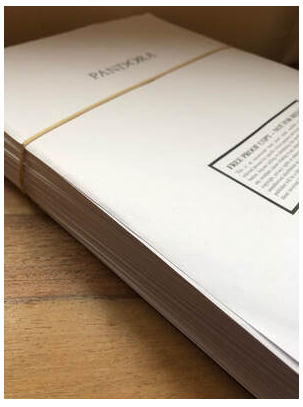
The proofread is done when the book has had its first typeset, and it's your last chance to make changes. I was given the option to do the proofread onscreen in a PDF reader like Adobe, but I always work best with seeing the physical thing and so the full MS was posted to me at my request. I prefer having the pages in front of me because I catch more mistakes/issues that way - if I stare at my writing on screen for too long I can often become blind to what I'm reading. It's why during drafts and edits I will switch up the font I'm writing in (I prefer Garamond, but will change to Times New Roman or another serif typeface depending on my mood/ease of screen viewing). In any case, proofreading is no different to what many authors do during their usual on-page edits per draft - red-penning the hell outta it, marking what to delete, substitute, etc.
Once you've made notes on the changes needed, you report these back to your editor or their assistant, depending on who sent them over in the first place. This can either be by making a typed list and sending that over in an email or doing what I did, which was scan the individual pages into one document and send that in an email instead. Either way, make sure you're absolutely sure of the changes you're requesting - as I said, this is your last opportunity before the final MS goes to print (and I'm pretty positive I will still spot something I should have changed after it's hit bookshops).
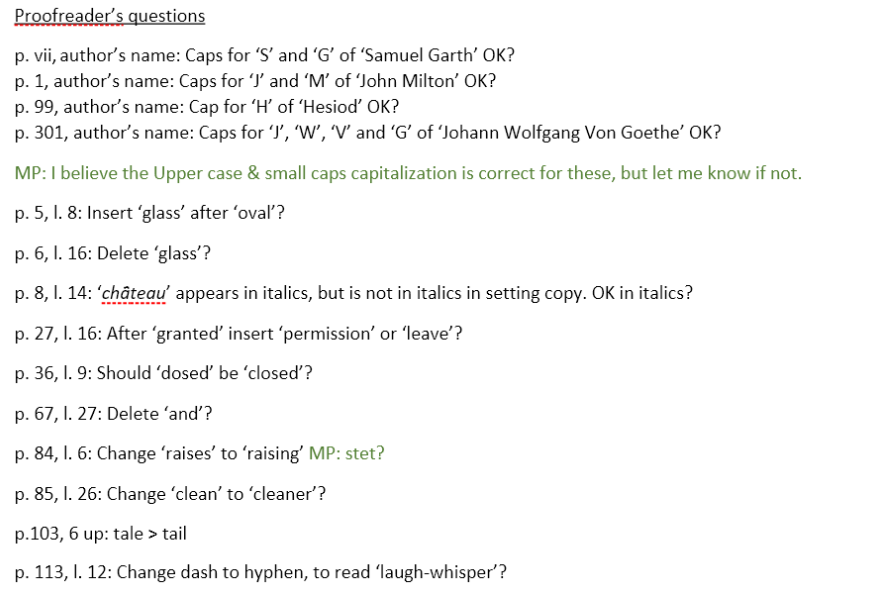
There is another element to the proofread. The MS has been sent to you, the author, but it has also been sent to a professional proofreader. They will make a list of queries, which are then sent over to you to approve or reject (see the image below for an idea of what these looked like for me). Both sets of proof changes - your own, and the ones you've authorised - will then be compiled into the final MS, which is then sent to the typesetter again for it to be turned into the completed version of the book.
What happens next?
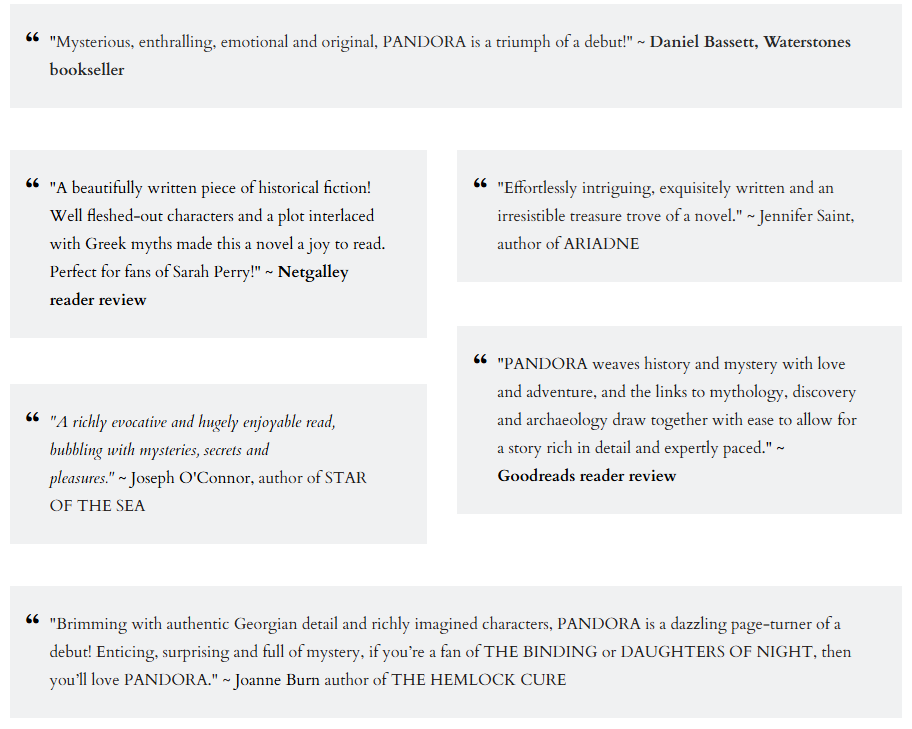
It totally depends on what the publishing schedule is, but typically the novel goes onto proof distribution. This is when an unedited version of the novel (so, a typeset copy of the novel before it went to proofreading stage) is sent out to booksellers, authors, bloggers and, sometimes, celebrities for endorsements, which are quotes that can be used on the final cover or for general marketing purposes and therefore a means to increase visibility with the aim to boost pre-orders. I was very thankful to have some wonderful quotes come in for Pandora. Here are some of my favourites (and there are still more incoming):
And after that?
Now that the proofs are out in the world and the book is ready to be printed, you can breathe easier. While of course you can expect to receive marketing and publicity responsibilities from 'up-high', these will vary widely based on what your publisher requires from you, and how much you feel comfortable doing, so it would be impossible for me to advise further. But I hope this post has been useful for you and you have a better idea of what to expect during your publishing journey, even if the journey itself won't be the same as mine (because no journey is ever the same). Before getting a publishing deal I had a vague idea about what happened and how and when, but I still wasn't prepared for the reality of it, and I do remember feeling quite overwhelmed to start with.
To finish, then, here's a shameless little pre-order plug. Because, well, pre-orders really are everything in this business! (Many many thanks if you do pre-order - come chase me down at a bookshop so I can sign it for you!)
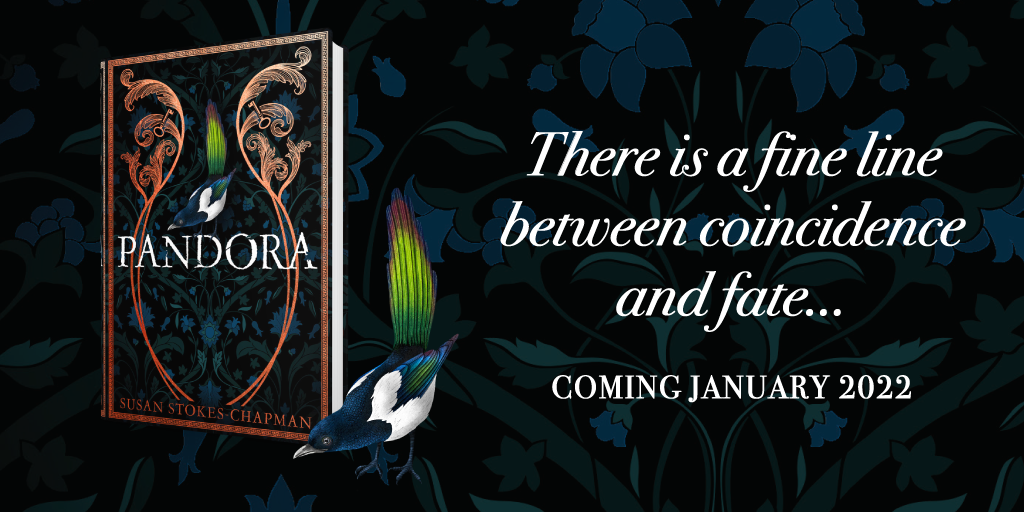
Pandora will be published in hardback, ebook and audio
on 27th January 2022.